
English (EN)
Linear Guide Grease for Precision Motion Systems
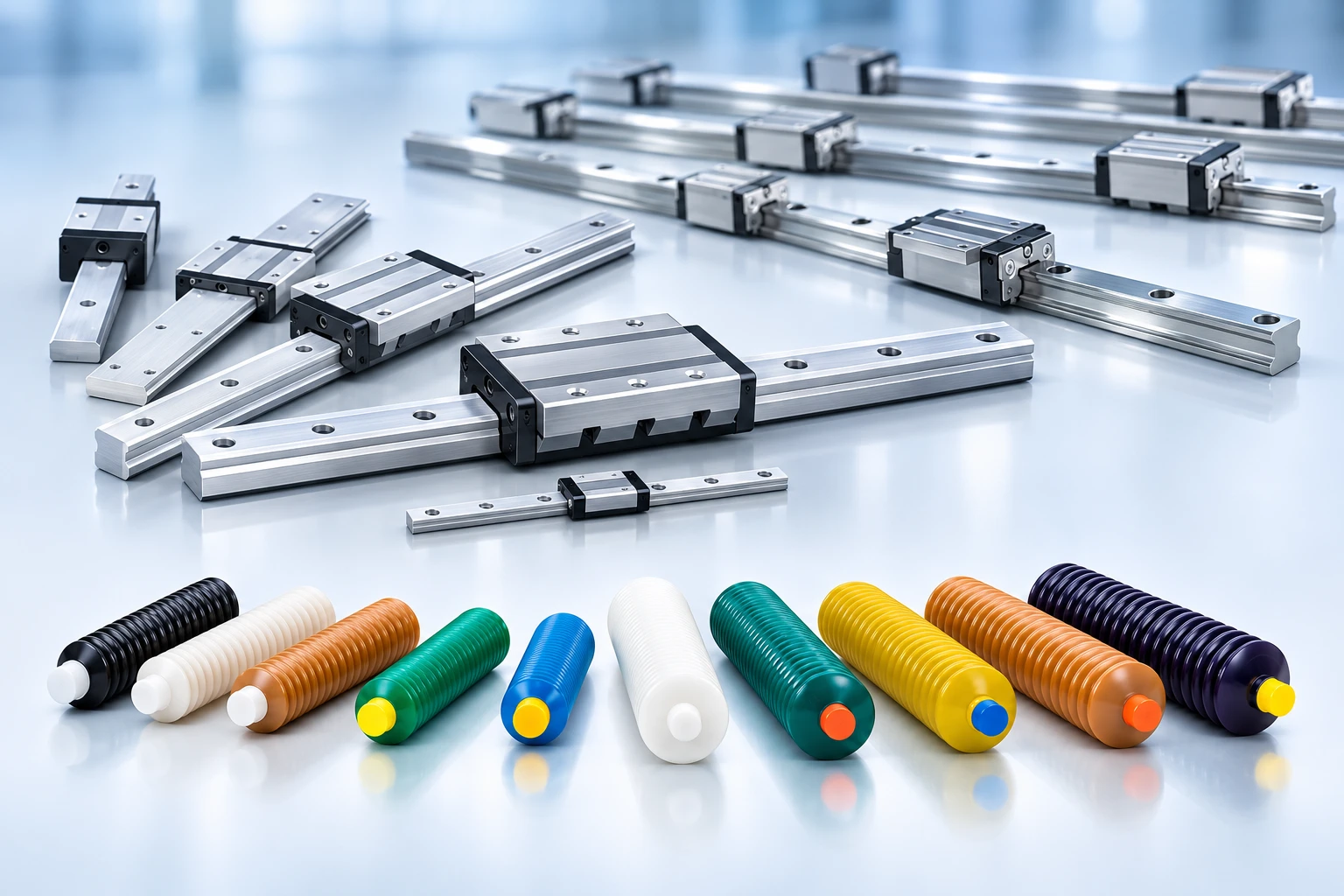
Engineered for linear guides, blocks, and rails. TRGLUBE provides targeted lubrication solutions for high-speed operation, heavy loads, short-stroke fretting protection, and cleanroom environments. Available in standard 70g and 400g cartridges.
What Is Linear Guide Grease?
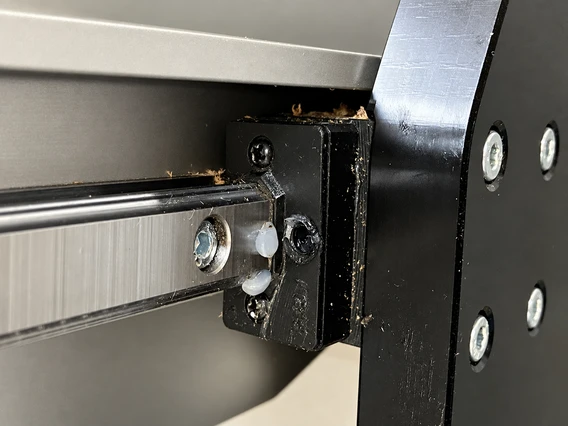
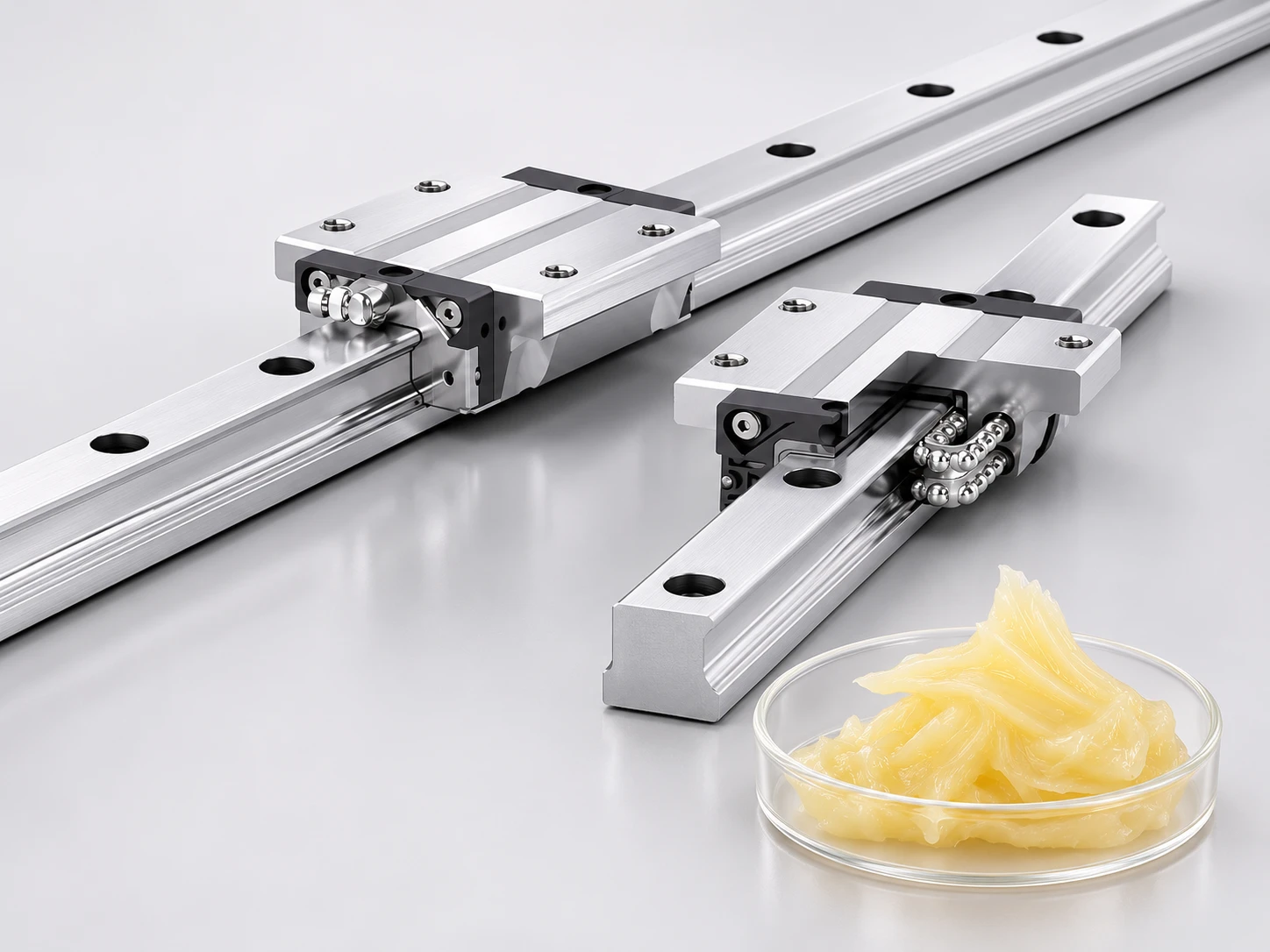
In a linear guide system, rolling elements (balls or rollers) circulate along the raceways of the rail. The guide block relies on these rolling contacts to achieve controlled, precise linear displacement.
Linear guide grease is specifically formulated to establish a durable lubricating film at these rolling contact points. It minimizes metal-to-metal wear, controls rolling friction, and protects precision surfaces from degradation.
Unlike general-purpose greases, precision motion lubricants must be selected based on base oil viscosity, thickener type, and environmental constraints. Variations in guide size, preload, stroke length, and cleanroom requirements dictate the exact formulation needed to prevent excessive sliding resistance or particle generation.
Common Lubrication Problems in Linear Guide Systems
Identifying the root cause of motion irregularities helps in selecting the correct grease formulation for your specific operational constraints.
1. Increased Sliding Resistance
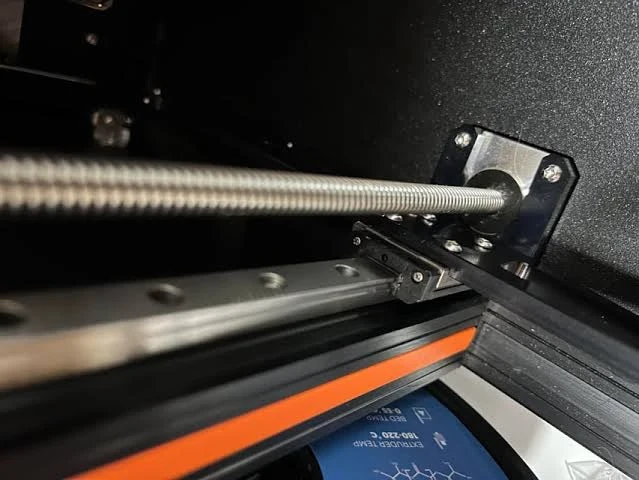
Abnormal running resistance often relates to high base oil viscosity, degraded grease, contamination, or improper preload matching.
2. Raceway Wear Under Load
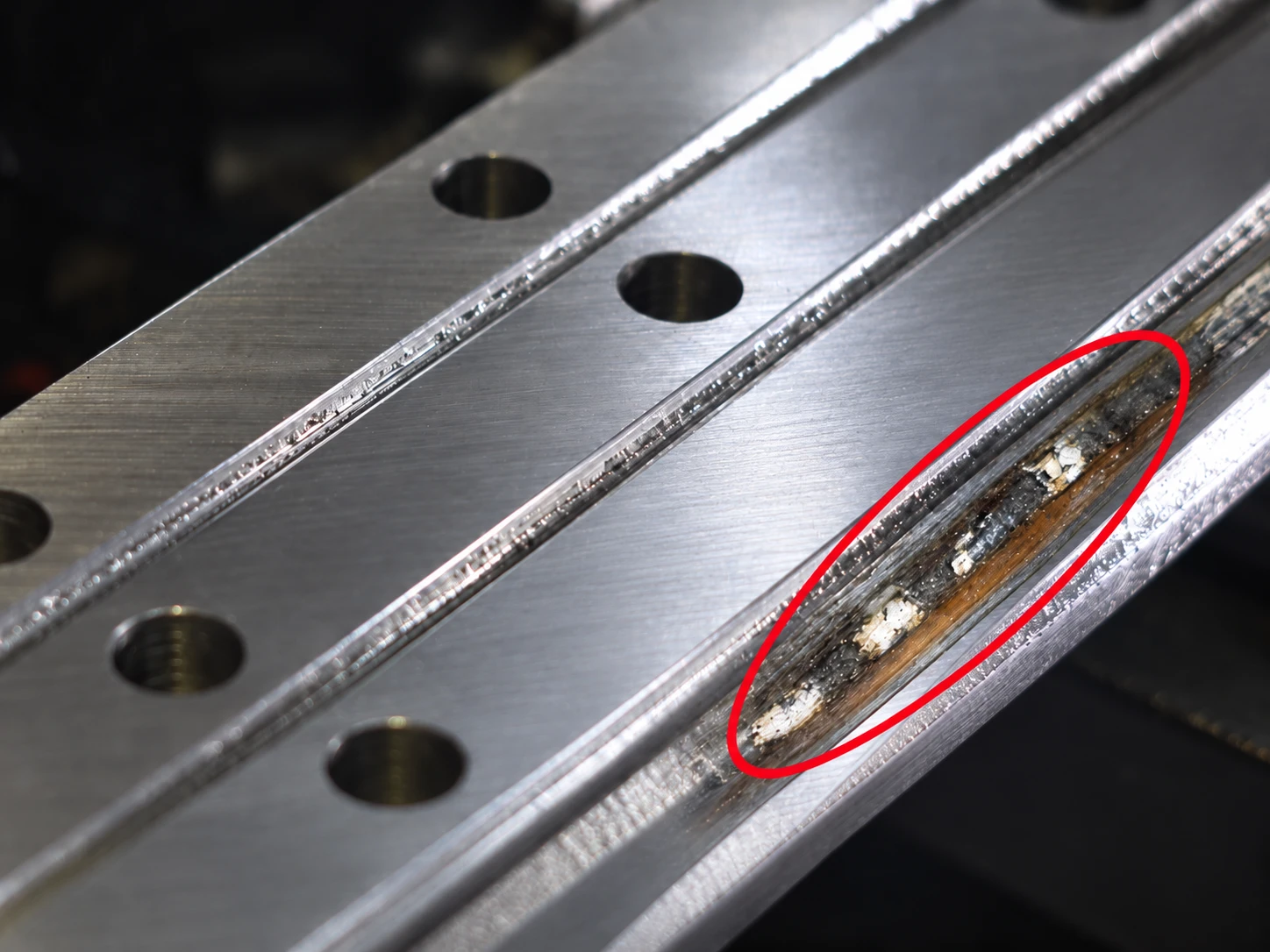
Heavy loads and repetitive motion can break down the lubrication film, causing metal fatigue and raceway spalling.
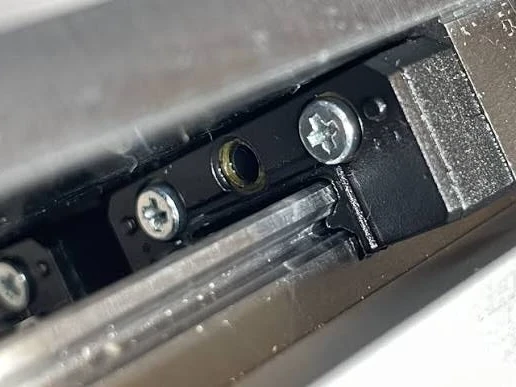
3. Fretting in Short-Stroke Motion
Micro-oscillations prevent the grease film from redistributing, leading to localized fretting wear on the rolling elements.
4. Grease Loss & Contamination
Exposure to dust, metallic chips, or CNC coolant can wash away grease or degrade its lubricating properties rapidly.

5. Particle Generation
Standard greases release micro-particles during motion, which is unacceptable for semiconductor and optical equipment.

6. Grease Compatibility
Mixing incompatible thickeners (e.g., lithium and urea) during relubrication can cause the grease structure to collapse.
Linear Guide Grease Products for Different Motion Conditions
Explore TRGLUBE's engineered formulations designed to address specific industrial challenges, from high-speed actuation to cleanroom precision.
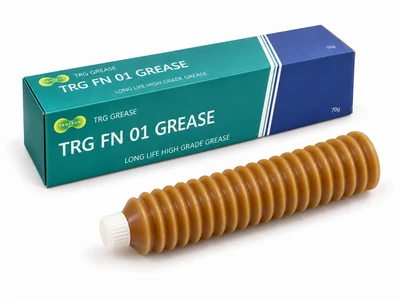
TRG FN Ⅰ
70g / 400gLow-Friction & High-Speed Grease
- Base Oil Viscosity: 25 mm²/s (40℃)
- Temp Range: -45℃ to 160℃
- Key Application: Long-stroke, high-speed linear modules requiring minimal sliding resistance.
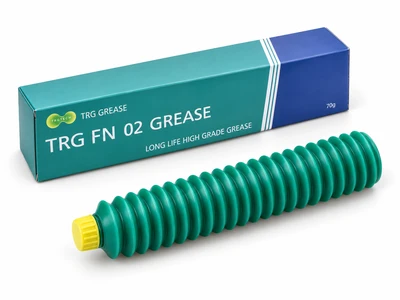
TRG FN Ⅱ
70g / 400gMultipurpose EP Grease
- Base Oil Viscosity: 170 mm²/s (40℃)
- Temp Range: -15℃ to 100℃
- Key Application: General industrial guide rails facing higher loads and requiring extreme pressure (EP) resistance.

TRG FN Ⅲ
70g / 400gAnti-Fretting Grease
- Base Oil Viscosity: 25 mm²/s (40℃)
- Temp Range: -54℃ to 177℃
- Key Application: Systems experiencing repetitive short-stroke motion and micro-vibrations prone to fretting wear.
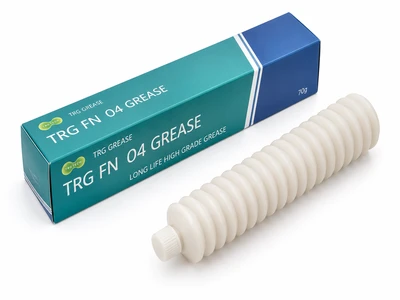
TRG FN Ⅳ
70g / 400gLow-Particle Cleanroom Grease
- Base Oil Viscosity: 99 mm²/s (40℃)
- Temp Range: -40℃ to 180℃
- Key Application: Precision automation in semiconductor and cleanroom environments requiring strict particle control.
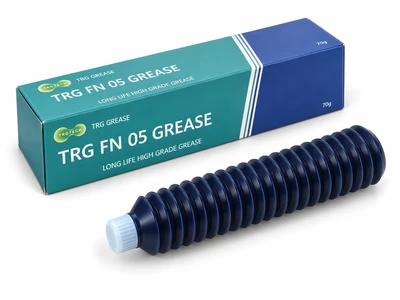
TRG FN Ⅴ
70g / 400gLow-Dust Precision Motion Grease
- Base Oil Viscosity: 100 mm²/s (40℃)
- Temp Range: -40℃ to 120℃
- Key Application: Low-speed precise positioning requiring stable rolling resistance and low dust generation.
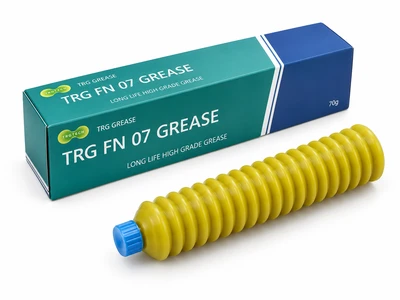
TRG FN Ⅶ
70g / 400gWide-Speed-Range Grease
- Base Oil Viscosity: 20 mm²/s (40℃)
- Temp Range: -20℃ to 120℃
- Key Application: Linear guide systems balancing low and high-speed operation with excellent wear and vibration control.
How to Select the Right Linear Guide Grease
Proper selection requires evaluating mechanical parameters beyond just finding a "high quality" lubricant. Guide block preload, stroke length, and contamination risks all dictate the correct choice.
Key Selection Factors
- ✓ Load and Preload Level
- ✓ Travel Speed & Acceleration
- ✓ Stroke Length (Long vs. Micro-stroke)
- ✓ Operating Temperature Range
- ✓ Cleanroom / Particle Requirements
- ✓ Exposure to Coolant, Dust or Water
- ✓ Compatibility with Existing Grease

| Operating Condition | Main Lubrication Concern | TRG Grade to Evaluate |
|---|---|---|
| High-Speed Long Stroke | Running resistance, heat generation | FN Ⅰ |
| General Industrial Load | Load support, mechanical stability | FN Ⅱ |
| Repetitive Micro-Stroke | Fretting protection, film retention | FN Ⅲ |
| Cleanroom Motion | Particle contamination, outgassing | FN Ⅳ |
| Low-Speed Precision Motion | Stable rolling resistance, short stroke | FN Ⅴ |
| Wide-Speed Operation | Wear and vibration control across speeds | FN Ⅶ |
*Note: This table provides preliminary evaluation directions. Actual rail design, seal type, and ambient conditions may influence final compatibility.
Compare TRG Linear Guide Grease Specifications
Review verified technical parameters based on TRG catalog data to assist in your engineering evaluation.
| Grade | Base Oil | Thickener | Base Oil Viscosity (40℃, mm²/s) |
Worked Pen. (25℃, 60 strokes) |
Dropping Point | Operating Temp | 4-Ball Weld Load (ASTM D2596, N) |
|---|---|---|---|---|---|---|---|
| FN Ⅰ | Synthetic | Urea | 25 | 285 | 261℃ | -45 to 160℃ | 3089 N |
| FN Ⅱ | Mineral | Lithium | 170 | 275 | 193℃ | -15 to 100℃ | 3089 N |
| FN Ⅲ | Synthetic | Urea | 25 | 288 | 269℃ | -54 to 177℃ | 3089 N |
| FN Ⅳ | Synthetic | Urea | 99 | 280 | 260℃ | -40 to 180℃ | 1236 N |
| FN Ⅴ | Synthetic | Lithium | 100 | 315 | 220℃ | -40 to 120℃ | 1236 N |
| FN Ⅵ* | Synthetic | Urea | 25 | 285 | 261℃ | -45 to 160℃ | 3089 N |
| FN Ⅶ | Mineral | Urea | 20 | 325 | 185℃ | -20 to 120℃ | 3089 N |
Base Oil Viscosity
Lower base oil viscosity (e.g., 25 mm²/s) generally reduces viscous drag and heat generation at high speeds, but may provide thinner films under heavy static loads.
Grease Consistency
Worked penetration indicates the grease's stiffness (NLGI grade). It should not be confused with oil viscosity. Proper consistency ensures the grease stays in the raceway.
Load-Carrying Performance
4-Ball Weld Load indicates extreme pressure properties in lab conditions. However, this data cannot be directly converted into the allowable payload of your linear guide block.
Why Motion Conditions Matter in Linear Guide Lubrication
Understanding the mechanical realities of precision motion helps prevent premature failure.
Insight 1: Long Stroke vs. Short Stroke
In long-stroke motion, rolling elements fully circulate, redistributing grease evenly. However, in short-stroke oscillation, the balls may not complete a full circuit, leading to localized lubricant starvation and fretting wear. Base oil viscosity alone cannot solve this; specific anti-fretting additives are required.

Insight 2: Load vs. Rolling Resistance
High loads demand robust film strength to prevent metal contact. Yet, selecting a grease with the highest possible Extreme Pressure (EP) rating often increases viscous drag, negatively impacting positioning accuracy in light-duty, high-speed applications.

Insight 3: Cleanroom vs. Vacuum
Low particle generation (cleanroom requirement) is not technically identical to low outgassing (vacuum requirement). While TRG FN Ⅳ controls dust effectively for semiconductor lines under atmospheric pressure, it should not be automatically assumed suitable for high-vacuum chambers without specific outgassing test data.

Insight 4: Grease Film vs. Alignment
If a linear guide exhibits sudden heavy resistance, engineers often blame the grease. However, abnormal resistance frequently stems from poor rail parallelism, incorrect block preload, eccentric loading, or damaged end seals. Grease cannot correct mechanical installation errors.

Linear Guide Grease for Industrial Equipment
Matching the lubricant to the specific operational constraints of your machinery ensures reliable performance.
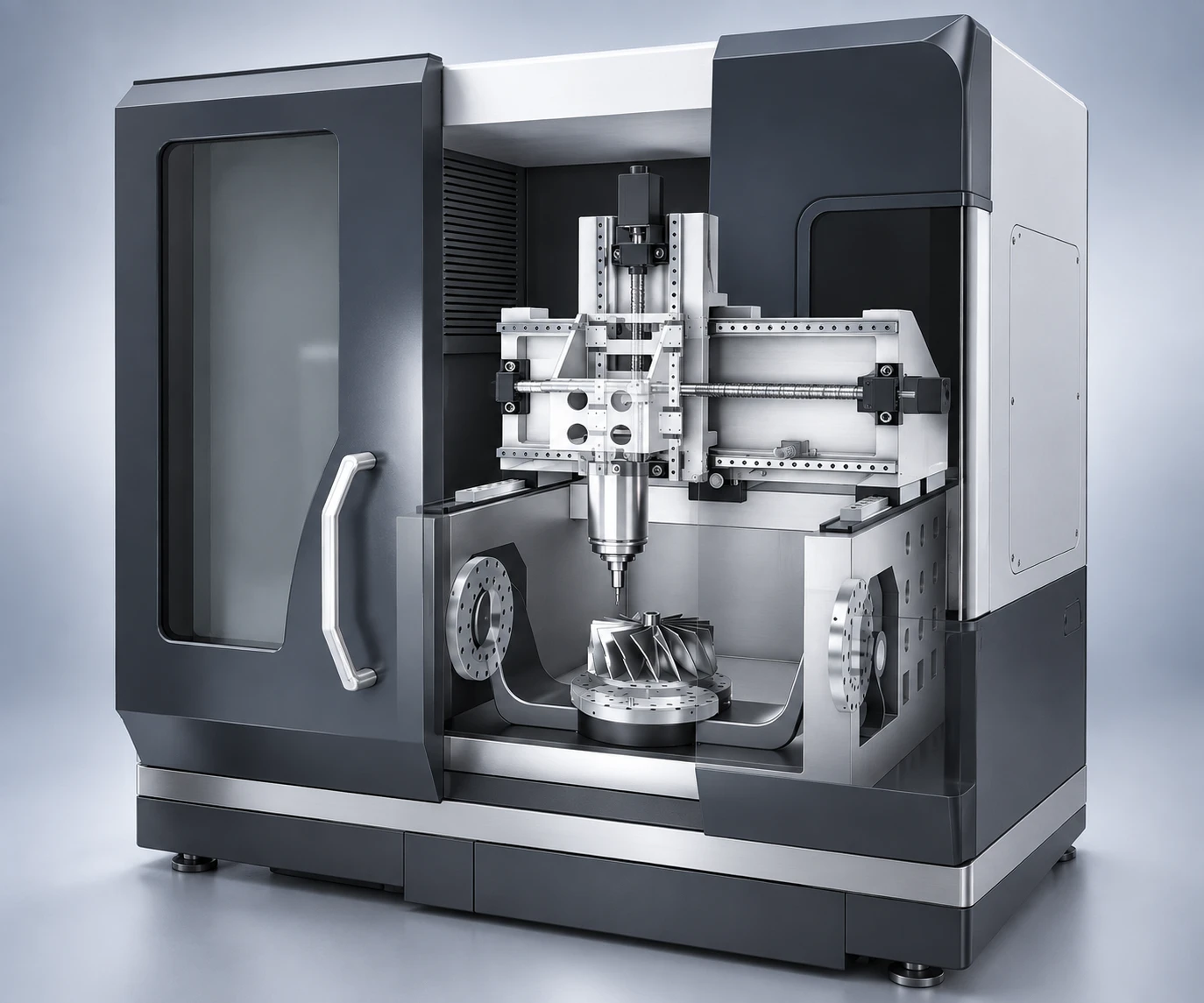
CNC Machine Tools
High feed rates, shifting loads, and coolant exposure.
Direction: FN Ⅰ or FN Ⅱ based on load

Industrial Automation
XYZ modules and transfer platforms with varied stroke lengths.
Direction: FN Ⅰ (High Speed)

Semiconductor Equipment
Strict cleanroom standards requiring minimal particle emission.
Direction: FN Ⅳ (Low Particle)

Electronic Assembly (SMT)
High-frequency, short-stroke repetitive positioning.
Direction: FN Ⅲ (Anti-Fretting)

Precision Inspection
Low-speed sliding requiring exceptionally stable rolling resistance.
Direction: FN Ⅴ (Low Dust/Stable)

Packaging Machinery
Continuous reciprocating motion in potentially dusty environments.
Direction: FN Ⅱ or FN Ⅶ
How to Apply Grease to Linear Guide Blocks
Proper application ensures the grease reaches the raceways without damaging the end seals or introducing contaminants.

Inspect Existing Lubricant
Check the current grease state and contamination level before adding new grease.
Clean Accessible Surfaces
Wipe the rail and grease nipple to prevent pushing dirt into the block.
Apply Specified Quantity
Inject grease according to the manufacturer's volume for that specific block size. Do not overfill until it bursts out.
Move Carriage & Inspect
Stroke the block back and forth to distribute grease. Wipe away excess to prevent dust accumulation.
How Often Should Linear Guides Be Relubricated?
There is no single universal interval for all linear guides. Relubrication frequency heavily depends on the operating environment and duty cycle. While a standard baseline might be every 100km of travel or 3 to 6 months, this must be adjusted based on:
- Total Travel Distance
- Operating Speed
- Applied Load & Preload
- Ambient Temperature
- Dust & Coolant Exposure
- Seal Condition
Practical Maintenance Logic
Check current grease state → Verify OEM manual → Adjust for contamination → Record history.

Evaluating Alternative Greases for Linear Guide Systems
Are you looking to replace an existing industrial grease? Review our supplier-provided cross-reference guide to identify the appropriate TRG formulation for evaluation.
Compatibility Checklist
Before replacing your existing grease, verify the following parameters to prevent chemical incompatibility or performance drops:
- Base Oil Chemistry (e.g., Synthetic vs. Mineral)
- Thickener Type (e.g., Urea vs. Lithium)
- Base Oil Viscosity
- Equipment Manufacturer Requirements
| Common Reference Target | TRG Evaluation Grade | Primary Focus |
|---|---|---|
| AFA | TRG FN Ⅰ | Low sliding resistance, high speed |
| AFB-LF | TRG FN Ⅱ | General purpose, EP performance |
| AFC | TRG FN Ⅲ | Anti-fretting, short stroke |
| AFE-CA | TRG FN Ⅳ | Low particle, cleanroom |
| AFF | TRG FN Ⅴ | Stable rolling resistance |
| AFJ | TRG FN Ⅶ | Wide speed range |
Disclaimer: This cross-reference is based on supplier technical direction for initial evaluation. It does not imply identical chemical formulations, nor does it claim authorization or certification from the referenced original brands. Buyers must verify compatibility based on actual operating conditions.
Product Information and Supply Support for Industrial Buyers
TRGLUBE supports your procurement process with verifiable technical data and application-specific guidance.
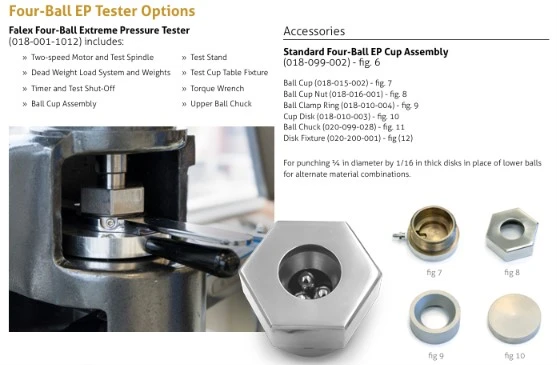
1. Documented Specifications
We provide confirmed parameters including base oil viscosity, dropping point, and 4-ball weld loads based on standard testing methods.

2. Application-Oriented Selection
Share your speed, stroke, load, and equipment type. We help narrow down the TRG grades suited for your engineering evaluation.
3. Verified Packaging
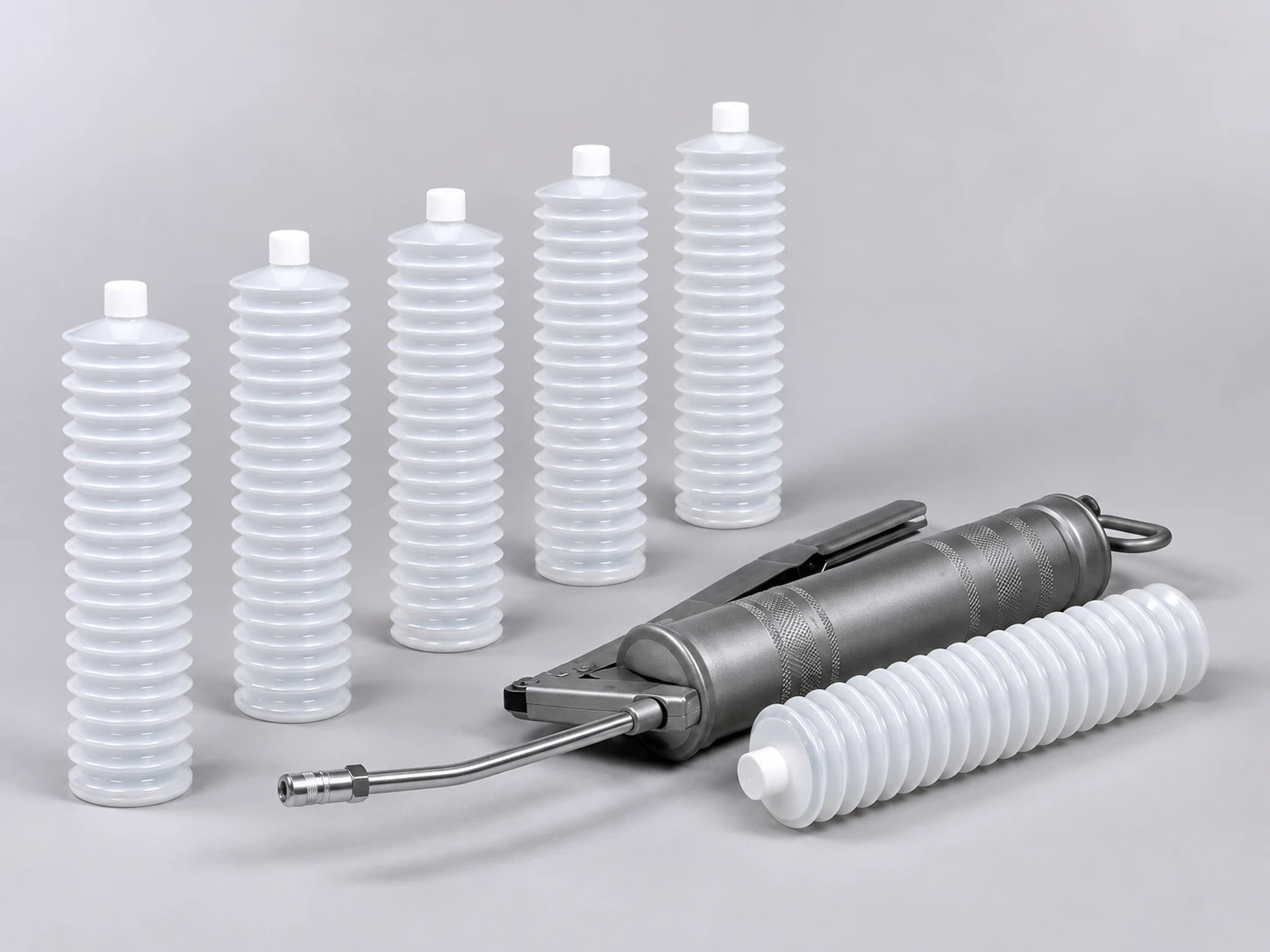
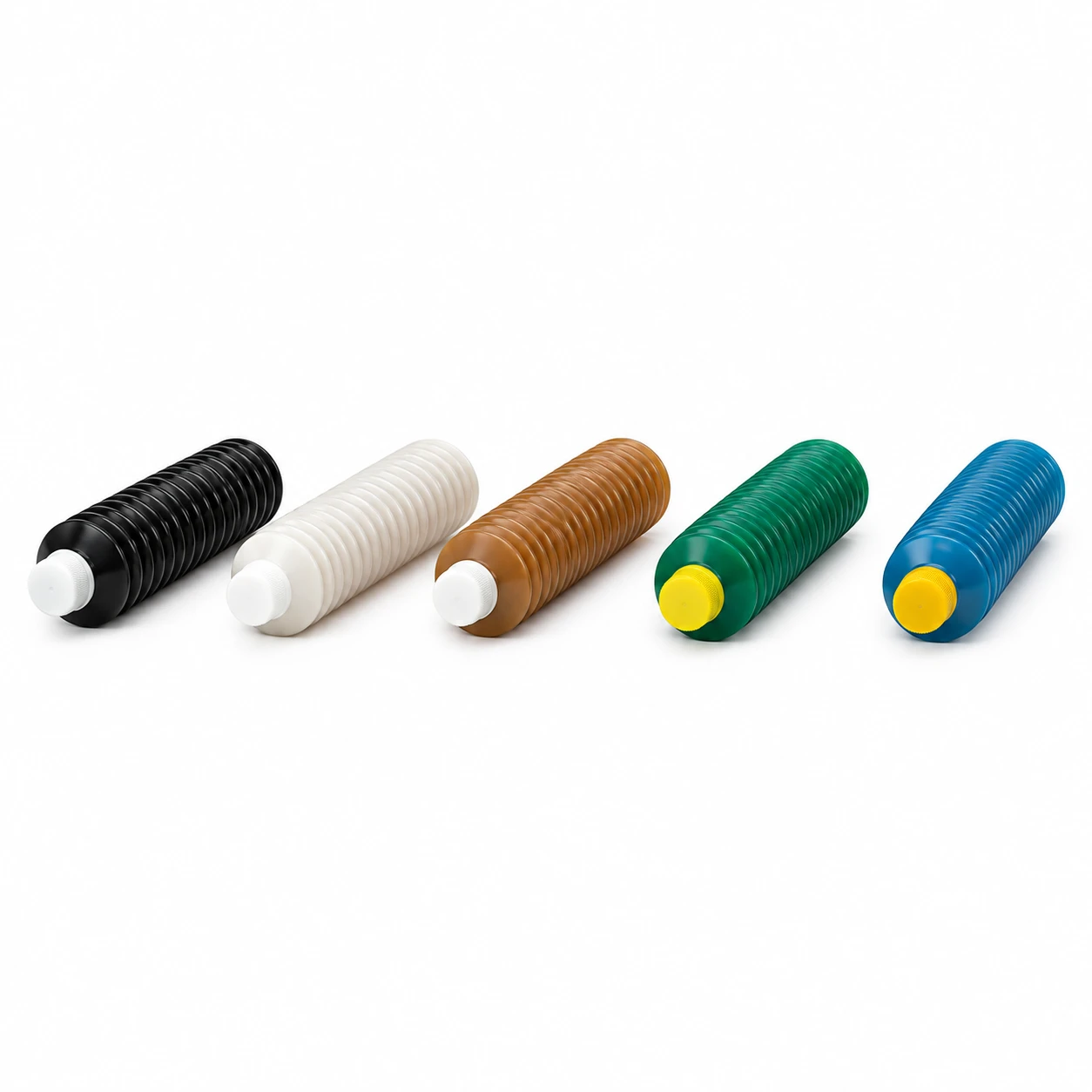
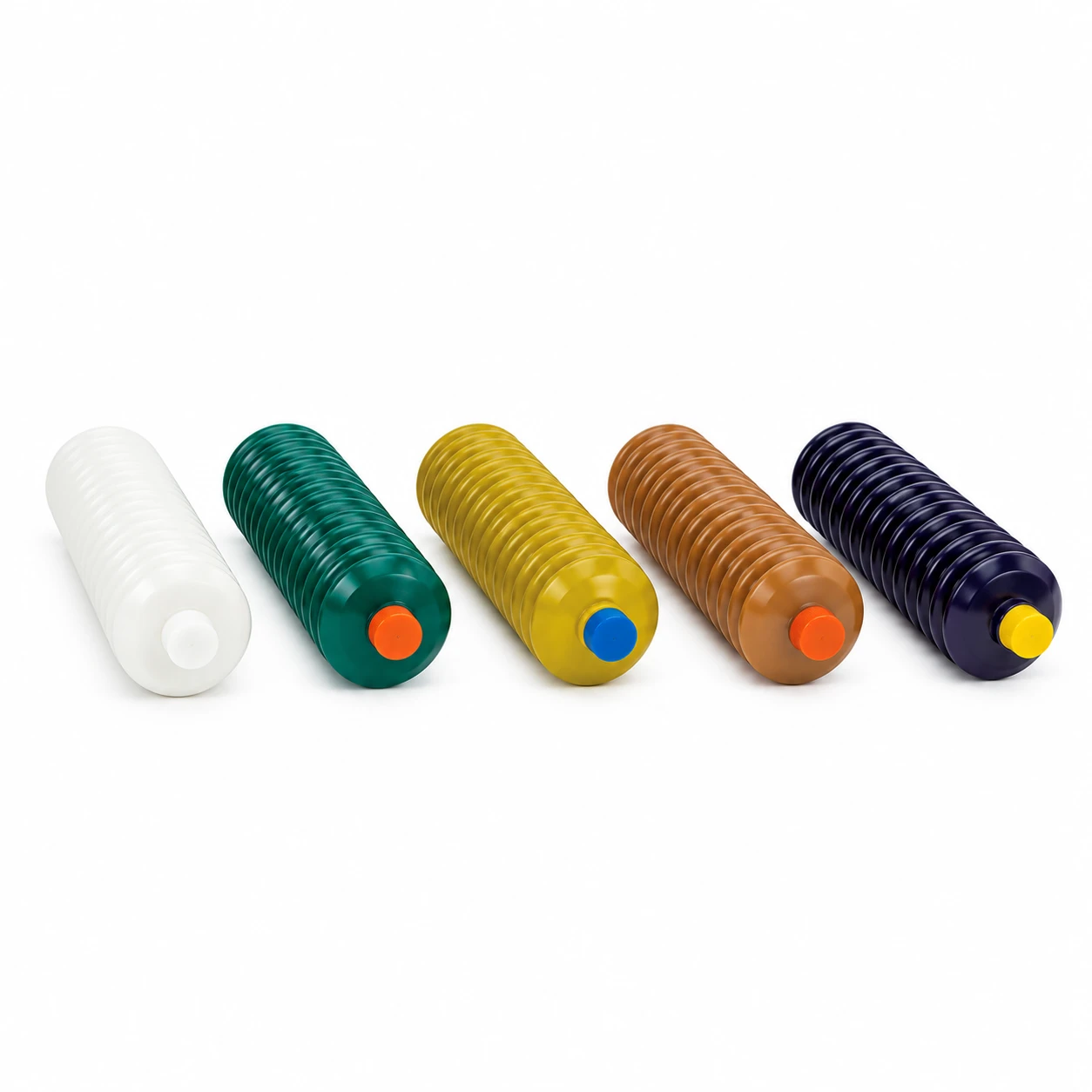
Supplied in standard 70g and 400g corrugated cartridges compatible with common industrial grease guns and automated pumps.

4. Technical Documentation
Request available TDS, SDS, and packaging dimension data to support your internal compliance and material approval process.
Linear Guide Grease Packaging for Industrial Purchasing
Whether you are an equipment manufacturer establishing assembly lines or an MRO buyer planning maintenance replenishments, selecting the right package size is critical for operational efficiency.
- MOQ: To Be Confirmed based on grade and region.
- Lead Time: Subject to Order Confirmation.
- Alternative Packaging: Availability Upon Inquiry.
Frequently Asked Questions About Linear Guide Grease
What grease should be used for linear guides?
Is lithium grease suitable for linear guide rails?
How often should I grease linear guide blocks?
How much grease should I apply to a linear guide carriage?
What grease is suitable for short-stroke linear motion?
What is the difference between linear guide grease and general-purpose grease?
Can I use low-particle grease in vacuum equipment?
Can different linear guide greases be mixed?
What information is needed to select TRG grease?
Related Grease Products and Technical Resources
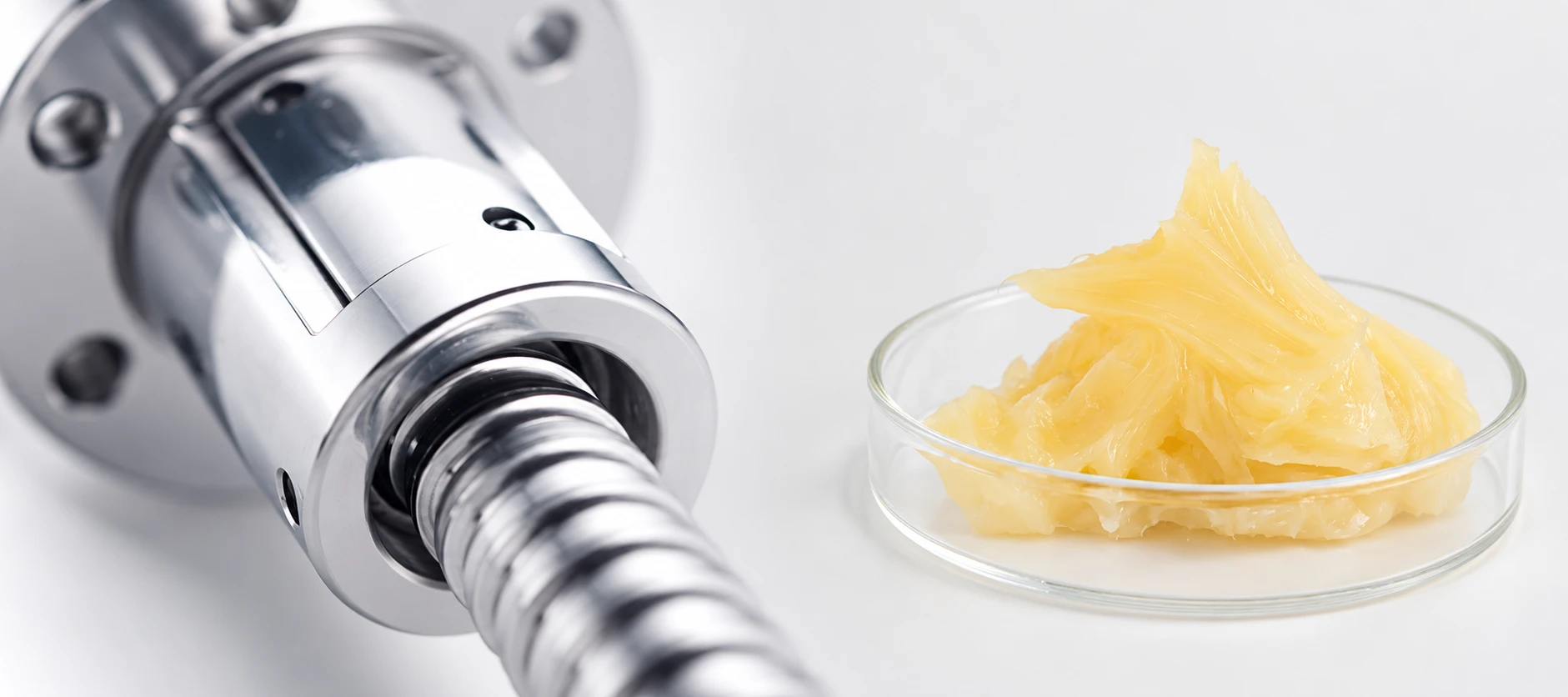
Ball Screw Grease
Explore lubrication for high-speed ball screws (e.g., TRG FN Ⅵ).

Lubrication Guide
Detailed steps, intervals, and maintenance procedures.
TRG FN Ⅲ Details
Deep dive into anti-fretting technology for short strokes.

Grease Compatibility
Technical parameters and replacement considerations.
Need Grease for Your Linear Guide Application?
Provide your operating conditions, and our engineers will help you select the most appropriate TRGLUBE grade for evaluation.